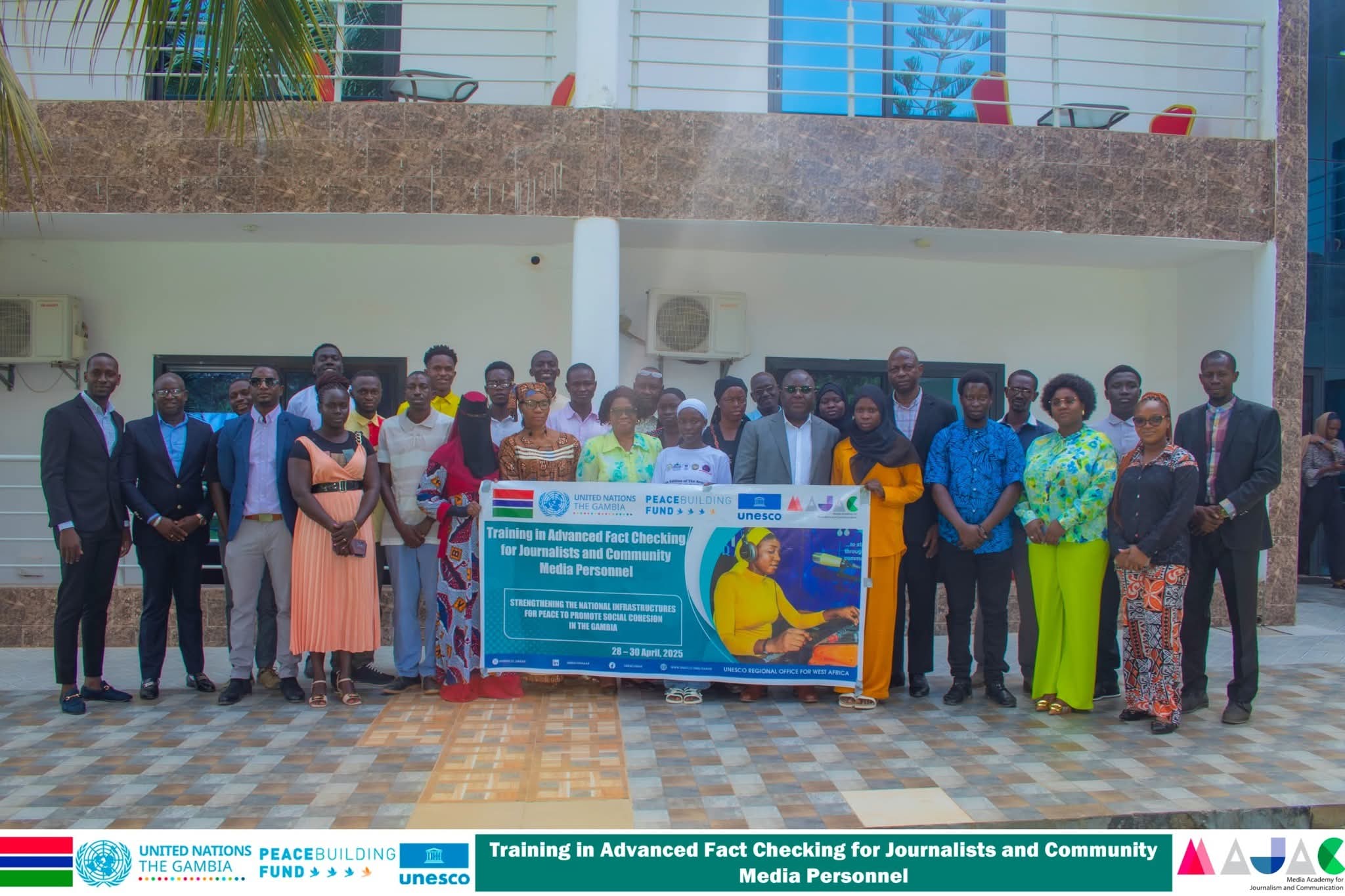
The Media Academy for Journalism and Communication (MaJAC), in partnership with UNESCO, have kicked off a three-day training on advanced fact-checking for 30 journalists, including community media workers drawn from the Gambia and Guinea Bissau.
This move by the Academy is another step to add quality to the media industry in The Gambia and Bissau, as media practitioners from within the country and Guinea Bissau converged for this intensive training on fact-checking.
In an era of disinformation and misinformation, causing threats in the media industry, fact-checking has become crucial in the daily operations of media personnel.

Caroline Anipah, a Media, Communication and Research professional from Ghana was the lead trainer. (Picture - MaJAC)
The capacity scheme aims to arm these journalists with the requisite skills to counter misinformation and disinformation, strengthening infrastructures for peace and promotion of social cohesion across the subregion.
James Badjie, the Director of Training at MaJAC, said the decision to select reporters from the Gambia and Bissau is triggered by the need to prepare them ahead of their respective elections as Guinea-Bissau will be heading into elections in November this year, while the Gambia will be heading to the polls in 2026.
‘In an era where falsehood spread faster than facts. Journalists and community radios are the front-line defenders of truth. With critical elections approaching in The Gambia and in Guinea Bissau. Misinformation information undermines public trust, distorts national discourse, and jeopardises peace.’
‘The project responds directly to these challenges. One of them is why we are gathered here, which is a rigorous three days training on advanced fact-checking, digital verification tools, and strategies to counter disinformation, including foreign interference and AI-driven disinformation.’ Badjie said.
Naomi Williams, the Deputy Permanent Secretary at the Ministry of Information, assured the government's full commitment to empowering the press in The Gambia.
‘We firmly believe that a free, vibrant, and responsible press is the bedrock of any thriving democracy. In recognition of this, the government of the Gambia is committed to creating an enabling environment, where journalists can operate without fear, where information flows freely and where truth remains the pillar of national discourse,’ she said.

Lamin Jahateh, a Gambian journalist, blogger, and a professional in media development and development communications, was among the trainers. (Picture - MaJAC)
Funding for this training is provided by UNESCO through the Infrastructure for Peace project. The project is themed on, “Empowering Journalists and Community Radios Through Effective Fact-Checking Training”.
Michel Kenmoe, the West African adviser for communication and information at UNESCO's regional office in Dakar, said ‘fact-checking contributes to media development’.
‘Every public interest story you clarify ripples out work, empowering individuals, protecting democracy and preserving information integrity. With strong commitment, together fact-checkers and community media can nurture trust in the information ecosystem of our respective countries. We all know our population needs to have trust in the information ecosystem.’

Michel Kenmoe, the West African adviser for communication and information at UNESCO's regional office in Dakar was one of the trainers. (Picture - MaJAC)
Modou S. Joof, the Secretary-General of the Gambia Press Union highlighted the need for fact-checking desks across the newsrooms.
‘The Gambia Press Union recognises that there is a capacity gap in fact-checking in the newsroom, including the absence of dedicated fact-checking desks in newspapers, radio, and television stations. We, therefore, welcome any support to train more journalists in fact-checking to close the capacity gap to build trust and enhance the accuracy and reliability of information disseminated by the news media.’ Joof said.
It is hoped that at the end of this three-day training, the participants will be well prepared to counter misleading information, especially during critical moments like elections as MaJAC and partners continue to devise efforts in strengthening trust within the media industry.
327 Likes
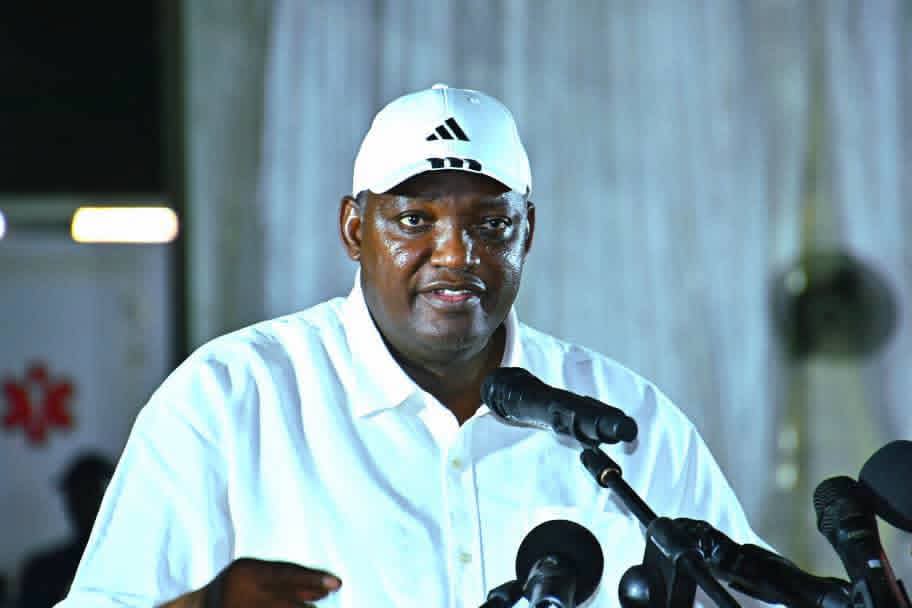
President Adama Barrow has warned the National Assembly Member for Banjul North of serious consequences if he leads protests to the State House again.The President issued the warning during the final meeting of his Meet the People Tour held at the Never Again Memorial Arch in Banjul, where thousands of supporters turned out.The event also saw the presentation of a D1 million cheque to eight women's groups in Banjul under the government's Women's Enterprise Development Fund.As with other legs of the tour, development and welfare issues dominated the discussions.Several prominent Banjulians, including Mass Axi Gaye, Pa Modou Mbye, youth representative and Lady Councillor Fatou Ngum, commended President Barrow for transforming the capital. They cited the Banjul Roads and Drainage Project as a lasting legacy that has rejuvenated the city after years of neglect, and pledged massive votes for the President in the December presidential election.Essa Faal of APP Sobeyaa said Banjul has changed thanks to massive investment in infrastructure. "Banjul has better and cleaner roads now, with its mosquito-infested gutters all covered," he said. He cited the new fish smoking market and the construction of the KG5 mini-stadium as further evidence of transformation.The former TRRC Lead Counsel defended his alliance with President Barrow, saying it came after careful reflection. He described Barrow as the only candidate with a proven development track record and noted his implementation of some TRRC recommendations. He predicted a landslide victory for the President in December.NPP Regional Chairman Alhaji Ousman Wadda and Deputy Mayor Aziz Dabakh Gaye also praised the President for the infrastructural transformation of Banjul, which they said will define his legacy. Mr Wadda disclosed that thousands of Banjulians have registered for the upcoming election and pledged victory for the President.The Deputy Mayor recalled past difficulties when residents had to be mobilised to clean open gutters, commending the President for taking up the challenge after decades of neglect.The meeting witnessed the presentation of D1 million to eight women's groups to support their economic activities under the Women's Enterprise Development Fund.The NAM for Banjul Central, Hon. Mam Abdoulie Njai, said President Barrow deserves another term given his development record over the past ten years. He appealed to the President to sponsor a football tournament to celebrate the completion of the KG5 mini-stadium, which he suggested should be renamed the Biri Biri Mini-Stadium in honour of the football icon.Regional Coordinator for Banjul, Ebrima Jawo, echoed similar sentiments and warned against the opposition. He also thanked the government for renovation works at the Edward Francis Small Teaching Hospital (EFSTH), which he said have significantly improved services.Minister of Lands and Regional Government, Hon. Hamat N.K. Bah, praised President Barrow's inclusive leadership and commitment to people's welfare. He thanked partners and stakeholders for a successful tour and made a final appeal for Gambians to vote for President Barrow. He also defended the government's handling of the economy, arguing that prices of basic commodities are lower in The Gambia compared to neighbouring countries.President Warns Against ProtestsIn his closing remarks, President Barrow advised the media to be independent, responsible and neutral, noting their role in portraying a positive image of the country.Addressing the recent electricity protests in the capital, the President accused the NAM for Banjul North of mobilising teenagers for a candlelight vigil at the State House. He described such acts as treasonous and warned against actions that risk destabilising the country.He warned the lawmaker of serious consequences if repeated, and called on people to respect the law and the sanctity of State House as the seat of government. He urged the people of Banjul North to replace the NAM in the next election, accusing him of failing his constituents.President Barrow thanked the people of Banjul for the massive turnout and appealed for a massive voter turnout in December.
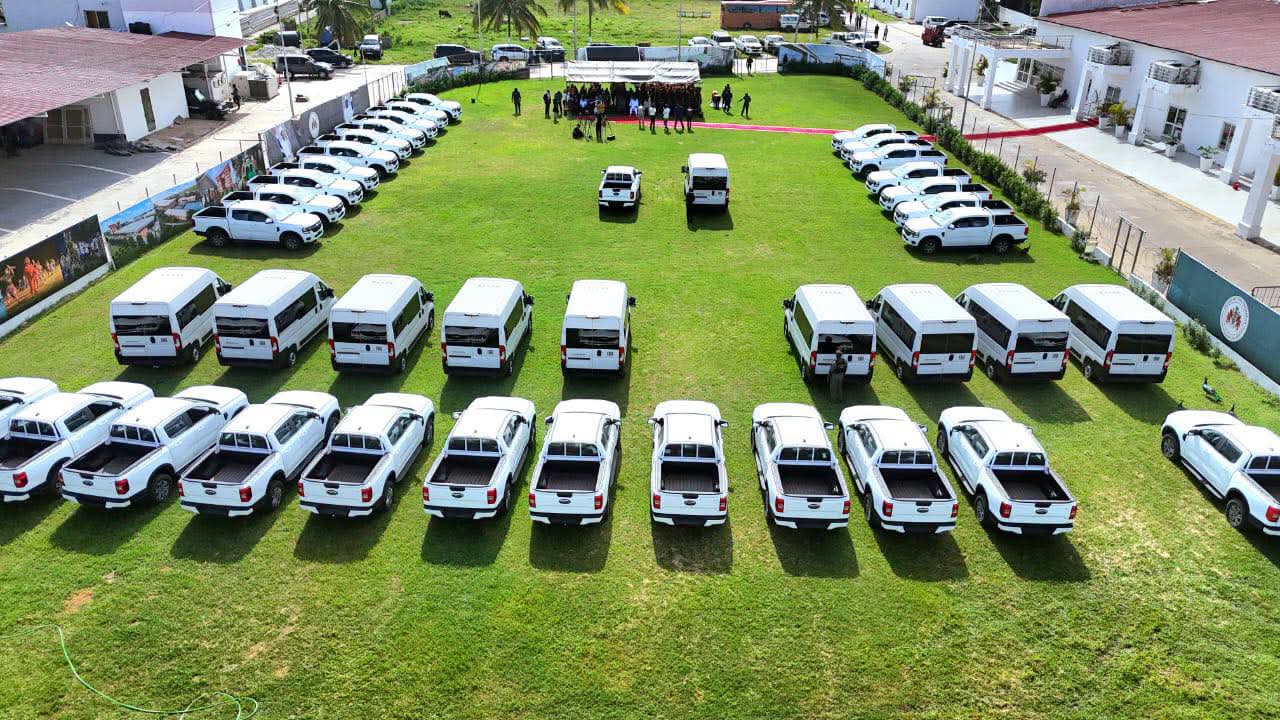
President Adama Barrow on Monday presented a fleet of 40 vehicles to the Ministry of Interior for onward distribution to security services.The vehicles were donated by the Government of Italy under an existing bilateral cooperation agreement with the Ministry of Interior aimed at strengthening The Gambia's security services.The presentation ceremony was held at State House and attended by security service chiefs and senior government officials.President Barrow handed over the vehicles to the Minister of Interior, Hon. Abdoulie Sanyang.Speaking to reporters after the ceremony, the Director General of The Gambia Immigration Department, Ebrima Mboob, described the partnership between The Gambia's security apparatus and their Italian counterparts as fruitful.He said the donation is timely and will strengthen the work of the security forces, improve mobility and expand their operational reach.Mr Mboob thanked the Minister of Interior for his support to the Immigration Department and the Police, and expressed gratitude to the Government of Italy for its continued assistance to the police and immigration in capacity building, border management and document security.The bilateral cooperation between The Gambia and Italy in the security sector has been ongoing for more than a decade.
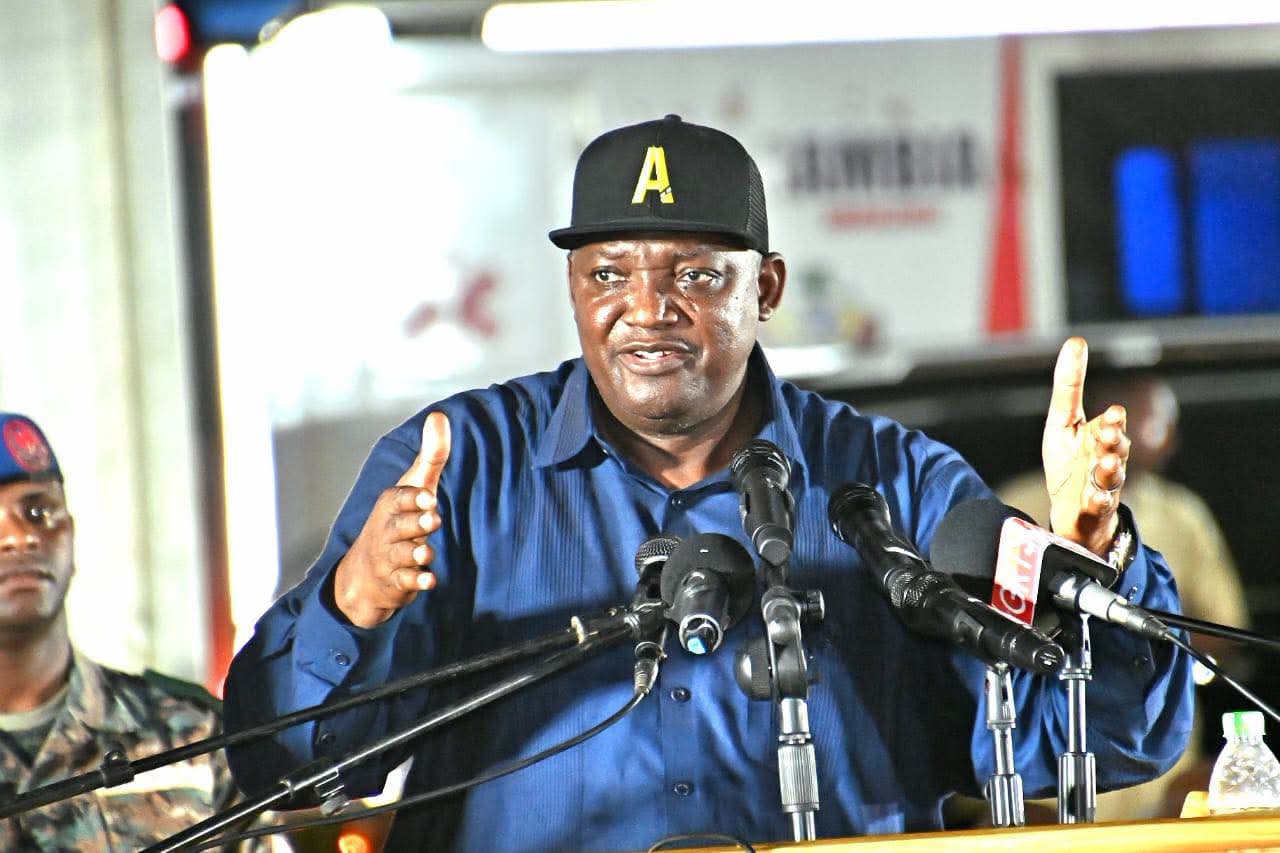
President Adama Barrow has promised to replicate the Banjul Roads and Drainage Project in Serekunda to modernise one of The Gambia's largest urban centres.The President pledged at a meeting in Serekunda as his Meet the People Tour entered the Kanifing Municipality (KM). He also warned young people against allowing themselves to be used by politicians for selfish political ends.President Barrow and his entourage were warmly received as his motorcade approached Serekunda School football field, where thousands of supporters had gathered for the meeting.The gathering was dominated by calls for continued support for President Barrow and the NPP-led Alliance.The Alkalo of Bundung, Saikou Konateh, thanked the President for solving the persistent water problems in Bundung, noting that water is now available. He pledged to mobilise his constituents to vote for President Barrow as a show of gratitude.Veteran politician and native of Serekunda, Hon. Kebba Jallow, urged the people of KM to abandon the opposition and embrace the ruling alliance, which he said has the welfare of the people at heart.Lady Councillor Anna Mbye, youth representative Mbayam Ceesay, and NPP Regional Chairman Mustafa Touray highlighted developments in KM under President Barrow, including the construction of roads, expansion of education and improved water supply.They, however, decried the poor state of services under the current municipal leadership, particularly the lack of water and toilet facilities at the Sandika and Serekunda markets, and urged voters to change the leadership at the Kanifing Municipal Council (KMC).Former NAM for Latrikunda Sabiji, Hon. Saikou Marong, said KM has immensely benefited from President Barrow's projects, citing roads built across the municipality as evidence.Minister of Lands and Regional Government, Hon. Hamat N.K. Bah, defended President Barrow's nine-year record as "development politics that delivers results."He argued that politics should not be about empty rhetoric but tangible results that improve lives. He disclosed that the government has launched a $45 million WACA project to develop the Kotu stream that runs through KM. According to him, the project will build bridges, promote economic activity, eliminate flooding and improve livelihoods. He appealed to the people of KM to vote for President Barrow in December to continue his development agenda."Serekunda Deserves Better"In his address, President Barrow praised the impressive turnout, saying it provided a unique opportunity to dialogue on national issues. He noted that Serekunda holds a special place as one of the country's biggest settlements.He challenged the people of KM to "rectify their political mistakes" by electing authorities willing to work with the central government to deliver development. While acknowledging massive developments in the last decade, he lamented the lack of cooperation from municipal authorities, accusing them of neglecting their responsibilities while living in luxury."This situation must change. KM deserves better," the President said, citing poor waste collection and the absence of water and toilet facilities in markets.President Barrow warned youth against being used as pawns by politicians, noting that during recent protests, many participants were children allegedly paid to vandalise public property. He urged them to desist from acts that undermine peace.Development Plan for SerekundaOutlining his programme, President Barrow disclosed plans to:Replicate the Banjul Roads and Drainage Project in Serekunda.Ensure 24-hour water and electricity supply.Sign a contract with an international company to collect and recycle waste from KM into renewable energy.Decommission the Bakoteh dumpsite and reclaim the land to build a garage and market for the people of KM.He challenged the people of Serekunda to take their destiny into their own hands and vote for progress, stating that the NPP-led Alliance stands for development, peace and stability.The tour continues in Kanifing Municipality with a meeting in Manjai Kunda.
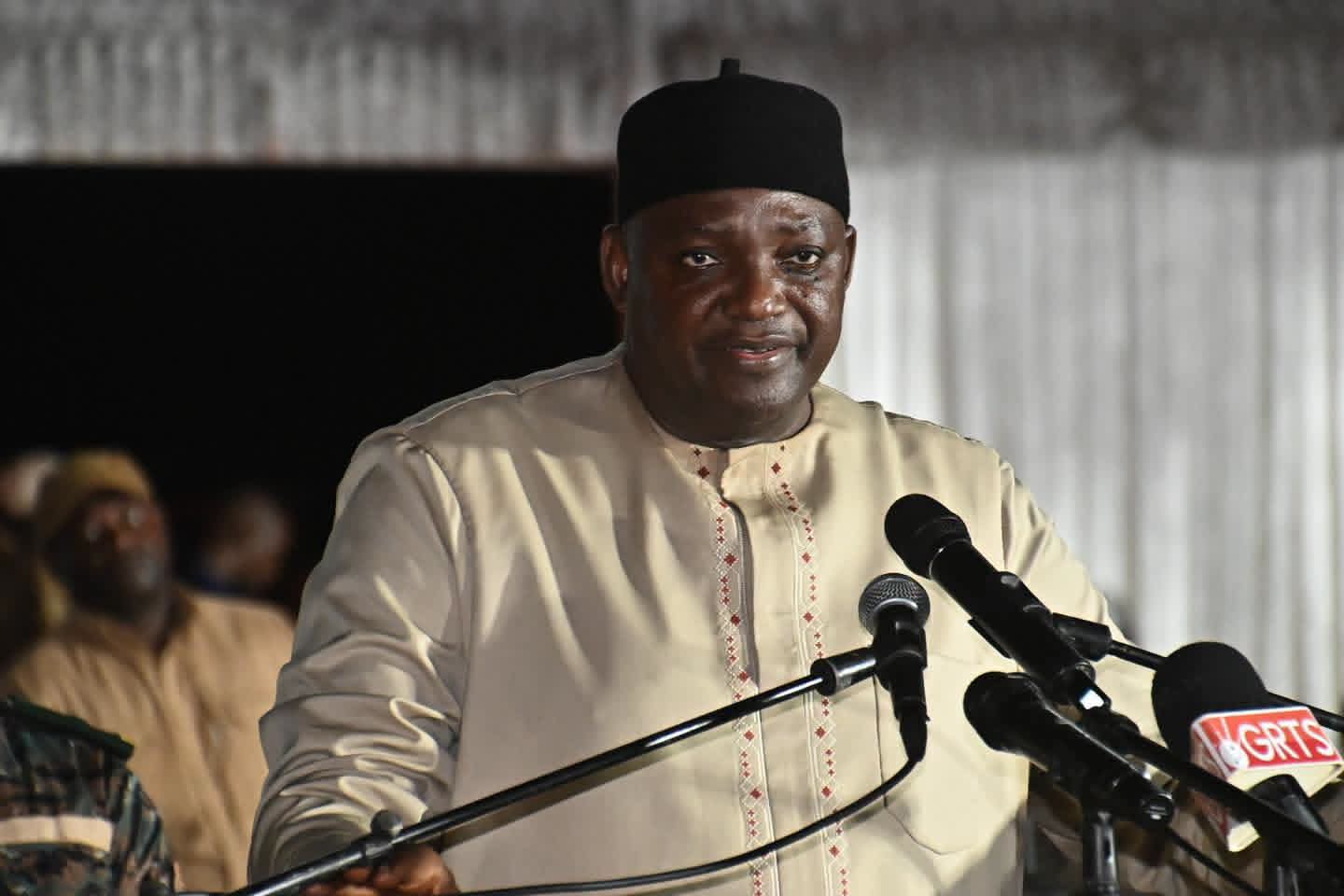
President Adama Barrow says ten years of his leadership have delivered more development in education, health care, infrastructure, electricity and skills development than 52 years under his predecessors combined.President Barrow was speaking in Manduar as he continued his Meet the People Tour in the West Coast Region.The President arrived in Manduar to a massive reception, with thousands of enthusiastic supporters lining the main highway leading to the meeting grounds.Manduar is a major stronghold of the NPP-led Alliance, and the turnout reflected that as supporters filled the football field to capacity.Delivering the welcoming remarks, the Alkalo of Manduar thanked the President for choosing the village as the venue for the Brikama Central meeting. He praised President Barrow’s charismatic leadership and the developments undertaken over the last ten years.The Alkalo also expressed gratitude to the President for paying alkalolu salaries for the first time in The Gambia’s history, describing it as a clear demonstration of his generosity and commitment to the welfare of Gambians. He promised to mobilise all his constituents to vote for President Barrow in December.Several other speakers underscored the importance of the meeting in consolidating the large voter base in Brikama Central, Brikama North and Kombo East. They said President Barrow represents progress, peace and stability, and commended his unprecedented developments across the country.The National Assembly Member for Kombo East, Hon. Abdou Sowe, declared that the opposition is “dead” in the region, arguing that President Barrow’s development record has convinced the people to abandon the opposition in favour of the NPP. He predicted a landslide victory for the President in December and said stakeholders are working closely to mobilise the grassroots.Minister of Agriculture Dr Demba Sabally said the government, through his ministry, has distributed tractors and power tillers to several communities in the West Coast Region, adding that thousands of kilograms of seeds and fertiliser have also been distributed to farmers, mostly women and youth.Minister of Lands and Regional Government, Hon. Hamat N.K. Bah, urged voters to give President Barrow another five-year mandate to continue his development agenda.In his address, President Barrow gave a comprehensive account of his government’s performance over the last decade, which he said surpasses the combined record of his two predecessors.On electricity, he said out of 1,800 settlements nationwide, only 300 remain without power, adding that tenders have been evaluated and contracts awarded to connect them.On roads, the President said his predecessors built about 800 kilometres in 52 years, while his administration has built almost 1,500 kilometres in just over nine years — a significant milestone.He said similar progress has been recorded in education, where his government has built thousands of classrooms equipped with electricity and science laboratories, constructed a unified campus for the University of The Gambia, and established several TVET centres across the country to equip young people with skills.On health care, President Barrow disclosed that the government has spent hundreds of millions of dalasis to modernise existing hospitals and health centres while building new facilities nationwide.These achievements, he said, underscore his commitment to national development. He called on voters to renew his mandate to enable him to accomplish more, stating that his government represents the future and cautioning Gambians against voting for the opposition.
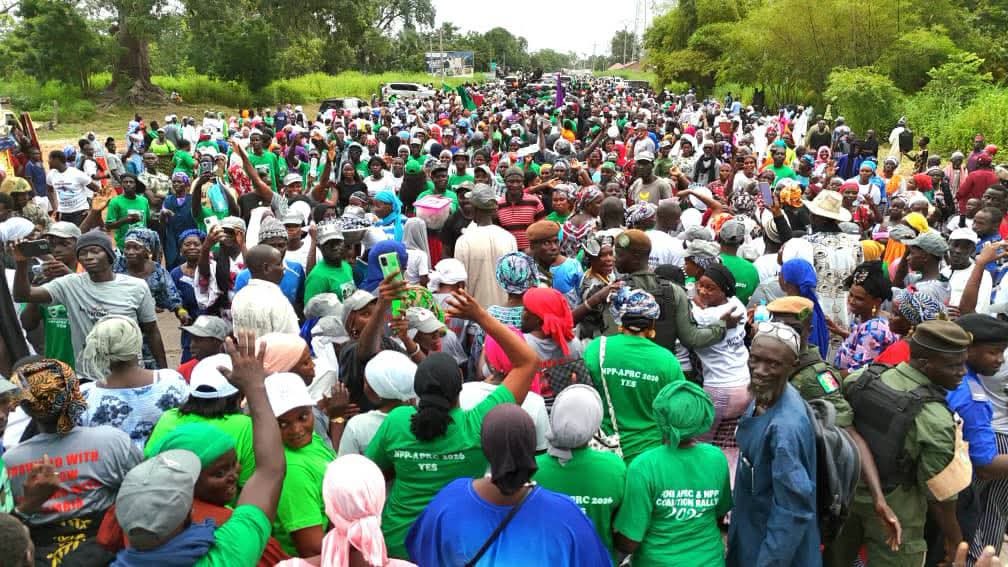
President Adama Barrow returned to Banjul on Saturday to a hero’s welcome after spending 10 days touring the provinces.Thousands of supporters lined the highway to welcome the President as he crossed the Brumen Bridge in Kalagi, marking his entry into the West Coast Region (WCR) and completing the first leg of his Meet The People Tour.President Barrow was seen off at the Lower River Region (LRR) – WCR border by Governor Sidi Lamin Bah and regional officials. He was received on the other side by the Governor of WCR, his deputy, chiefs, alkalolu and other regional officials.Supporters of the NPP and its alliance partners had mobilised from early afternoon, creating a carnival atmosphere with singing, dancing and cultural displays.Waving to the cheering crowds, the President’s motorcade made slow progress out of Kalagi, with several stops along the highway.At Kuloro, supporters greeted him with fanfare before the entourage proceeded to Brikama, where thousands more filled the main intersection. Jubilant crowds swarmed the presidential vehicle and escorted it out of town.Similar scenes were repeated along the Brikama-Serekunda Highway, in Farato, Busumbala, Lamin and at the Airport Junction, where supporters lined the road to cheer the President.At Yundum Barracks, President Barrow stepped out of his vehicle to acknowledge the Gambia Armed Forces band, which had mounted a tent to add to the ambience.After the long procession through WCR, the President arrived in Abuko where he was received by officials of the Kanifing Municipality. He greeted the line of officials before continuing through Kanifing, waving to crowds that lined the streets.At Tallinding, he was welcomed by the Speaker of the National Assembly and leader of the APRC, Hon. Fabakary Tombong Jatta, and his executive.The motorcade then moved through Westfield, where supporters staged a final show of force, before proceeding to Denton Bridge for the official handover ceremony. From there, the entourage headed to the Never Again Arch in Banjul.In the capital, supporters staged a massive reception and accompanied the motorcade to State House, marking the official end of the welcome ceremony.Addressing supporters, President Barrow thanked them for the extraordinary show of support and pledged to continue championing national development. He described the upcoming December election as a foregone conclusion, given the unprecedented support received in WCR, Kanifing and Banjul.Inside State House, he was received by Vice President Mohammed B.S. Jallow.Earlier in Mansakonko, President Barrow had assessed the first leg of the tour as very successful, saying it gave him a true understanding of the situation across the country. He pledged to continue prioritising infrastructure, social services and capacity building.The second leg of the tour, covering the West Coast Region and Greater Banjul Area, will resume after a short break.
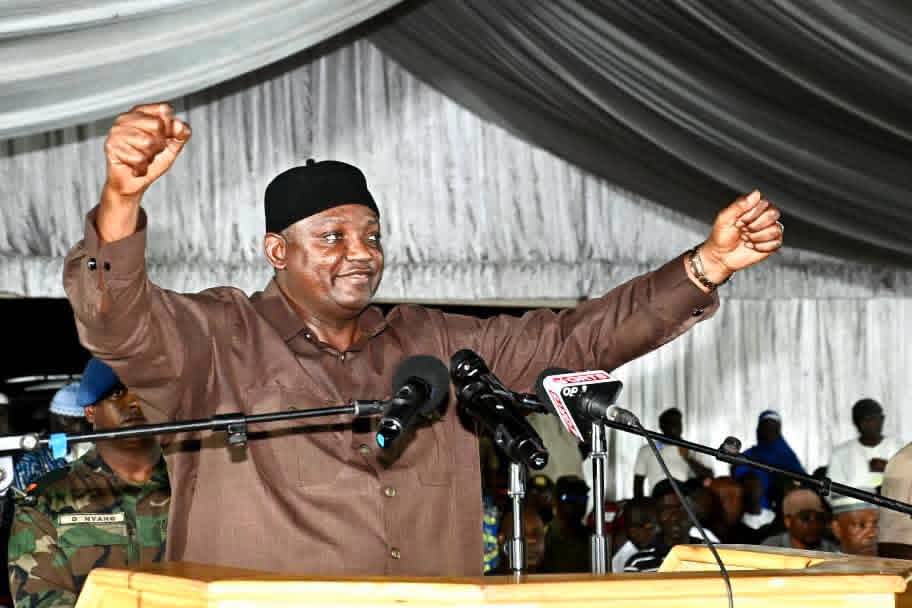
President Adama Barrow has hailed the completion of the 200km Kabada roads project as a major milestone in The Gambia's infrastructural transformation. He was speaking in Jarra Wellingara Ba and Kiang Kwinella as he wrapped up the first leg of his Meet the People Tour.The President also promised to electrify the remaining communities in Lower River Region (LRR).After nearly eight days in Upper River Region (URR) and Central River Region (CRR), President Barrow crossed into LRR at the Sofanyama Bridge, which marks the boundary between the two regions.Governor Ousman Bah of CRR, alongside his Deputy Sainey Mbye, chiefs, alkalolu and regional security chiefs, saw off the President. He was received on the other side by Seedy Lamin Bah, the Governor of LRR, and regional officials, before greeting a long line of local dignitaries. After traditional ceremonies, the entourage proceeded to Wellingara Ba in Jarra Central.At Wellingara Ba football field, supporters surrounded the President’s motorcade chanting slogans in a carnival atmosphere. The meeting opened with prayers, followed by welcoming remarks from Alkalo Ali Baldeh, who reaffirmed his support and loyalty to President Barrow and assured him of votes in December.Other speakers, including Chief Ansumana Kanaji of Jarra East, Lady Councillor Sira Sabally, youth representative Lamin A. Jobe, National Assembly Member Honourable Haruna Barry and Paramount Chief Yahya Jarjusey, all renewed their support and vowed to mobilise for the President ahead of the December polls.They acknowledged the positive developments but appealed for expansion of the electricity network, more investment in agriculture, provision of cold storage facilities for women gardeners, and vaccines to protect livestock.Responding, Minister of Agriculture Dr Demba Sabally said the government will embark on a massive livestock vaccination campaign next year. He added that the government has already provided nine tractors, tilled hundreds of hectares in several communities in LRR, and built seven cold storage facilities to support women.President Barrow thanked the people of Jarra for the impressive turnout, saying it underscores the strong support he enjoys in the area. He noted that LRR has the lion’s share of his road infrastructure drive, with 200km already completed, and appealed for patience for more to come.He said he feels emotional whenever he visits Kabada, where decades of isolation left the region underdeveloped.On electricity, the President said out of 1,800 settlements nationwide, only 300 remain without electricity, adding that contracts have already been signed to connect them. He declared that his “long hand of development” will reach every community.From Wellingara Ba, the entourage proceeded to Kwinella in Kiang Central for the final meeting in LRR, where supporters lined the main road to welcome the President.Speakers heaped praise on the government for opening up what was once an isolated part of the country. Elder Fabubu Bah said the road network has opened new corridors and made the region accessible. He promised the people will repay President Barrow with votes, saying opposition ballot boxes “will come to Kabada empty and will leave empty” to loud applause.NAM for Kiang Central, Hon. Yusupha Bah, recalled the difficulties Kabada faced in the past and contrasted it with the present, where all major roads are paved, describing it as an unprecedented feat that makes President Barrow the preferred candidate. He predicted a landslide victory.The meeting was cut short by heavy rains, forcing President Barrow to deliver a brief address. He thanked the people of Kiang for their support and promised to inaugurate the 200km road network later this month.
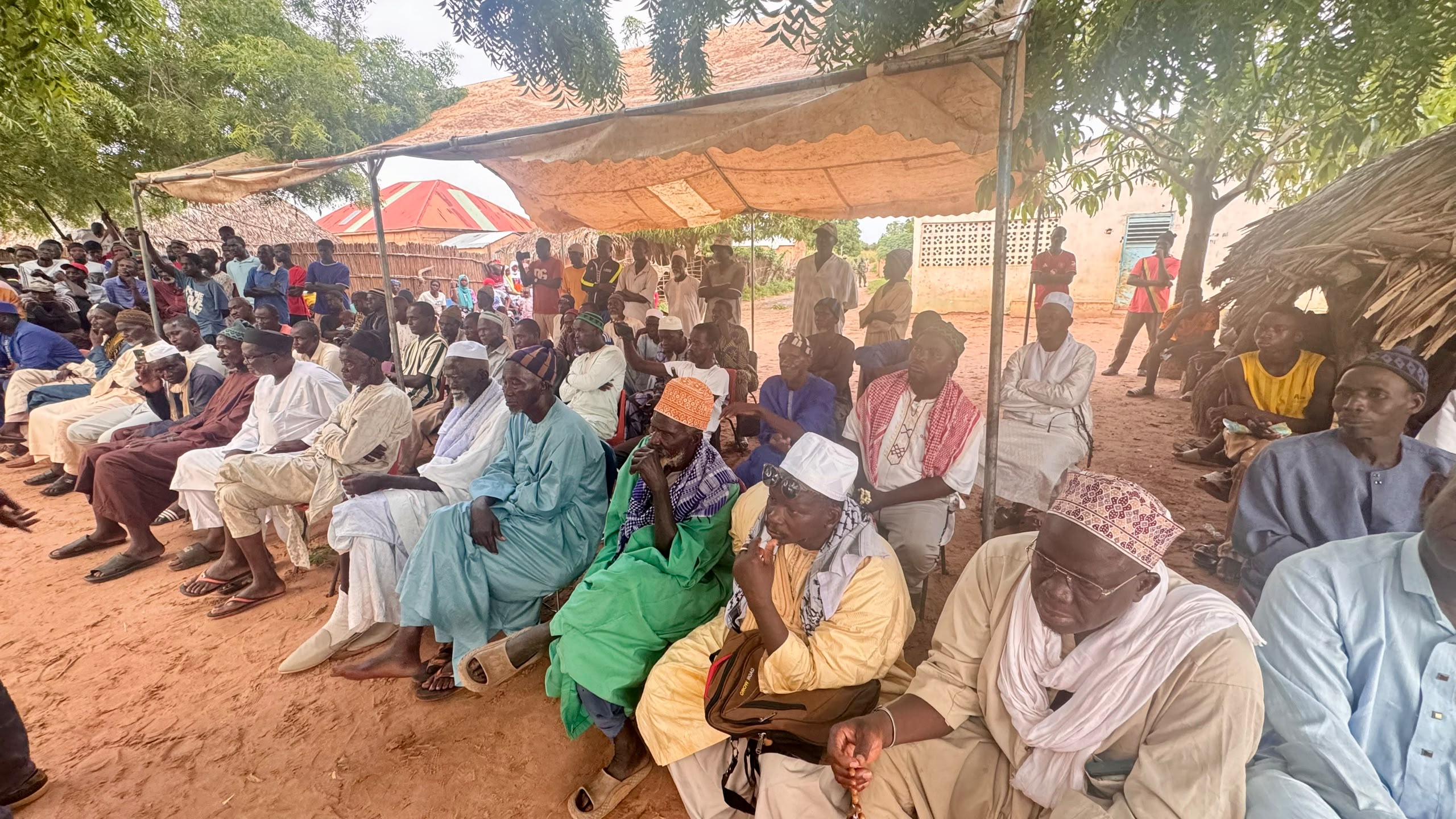
The Gambia and Senegal on Friday launched a sensitisation campaign to educate border communities on the ongoing border densification exercise and dispel misinformation and disinformation surrounding the process.Speaking at a community gathering in Njaw, Central River Region, National Security Adviser and Deputy Chairman of The Gambia’s Boundary Commission, Abubacar Jeng, said President Adama Barrow is paying close attention to the exercise and considers it a matter of national importance.Mr Jeng clarified that the exercise does not involve the demarcation of a new border, but rather the densification of the existing boundary to make it more visible and clearly identifiable.He acknowledged that the international boundary cuts across communities on both sides and assured residents that the exercise would not result in the loss of land belonging to individuals or communities.“The border is not being demarcated; it is being densified to make it clearer,” Mr Jeng said, while expressing confidence that communities on both sides would continue to coexist peacefully, as they have done for generations.(Abubacar Jeng, National Security Adviser and Deputy Chairman of The Gambia’s Boundary Commission)Chairman of Senegal’s Boundary Commission, General Saihou Camara, echoed the call for calm and peaceful coexistence. He urged residents not to take the law into their own hands should disputes or concerns arise during the exercise.General Camara advised community members to seek assistance from the appropriate authorities in either country to resolve any issues that may emerge.Representing GIZ, Dr Abdul highlighted the importance of clearly defining and identifying international boundaries. He explained that the densification exercise would improve clarity along the border and help reduce the potential for cross-border disputes and conflicts.The Prefect of Kaffrine, Madam Fall, also underscored the longstanding peaceful relations between communities on both sides of the border. She encouraged residents to preserve the spirit of cooperation and peaceful coexistence that has characterised their relationship over the years.The Chief of Upper Saloum, Alhaji Demba Sey, and his Senegalese counterpart spoke of the deep historical, cultural and social ties that bind communities in the border areas.Other speakers included alkalos and youth representatives from both The Gambia and Senegal, who also emphasised the importance of maintaining peace and understanding among border communities.The gathering marked the beginning of a wider sensitisation campaign aimed at reassuring communities about the objectives of the densification exercise while addressing concerns and combating misinformation and disinformation.Authorities from both countries urged residents to rely on verified information from the Boundary Commissions and relevant government authorities throughout the exercise.
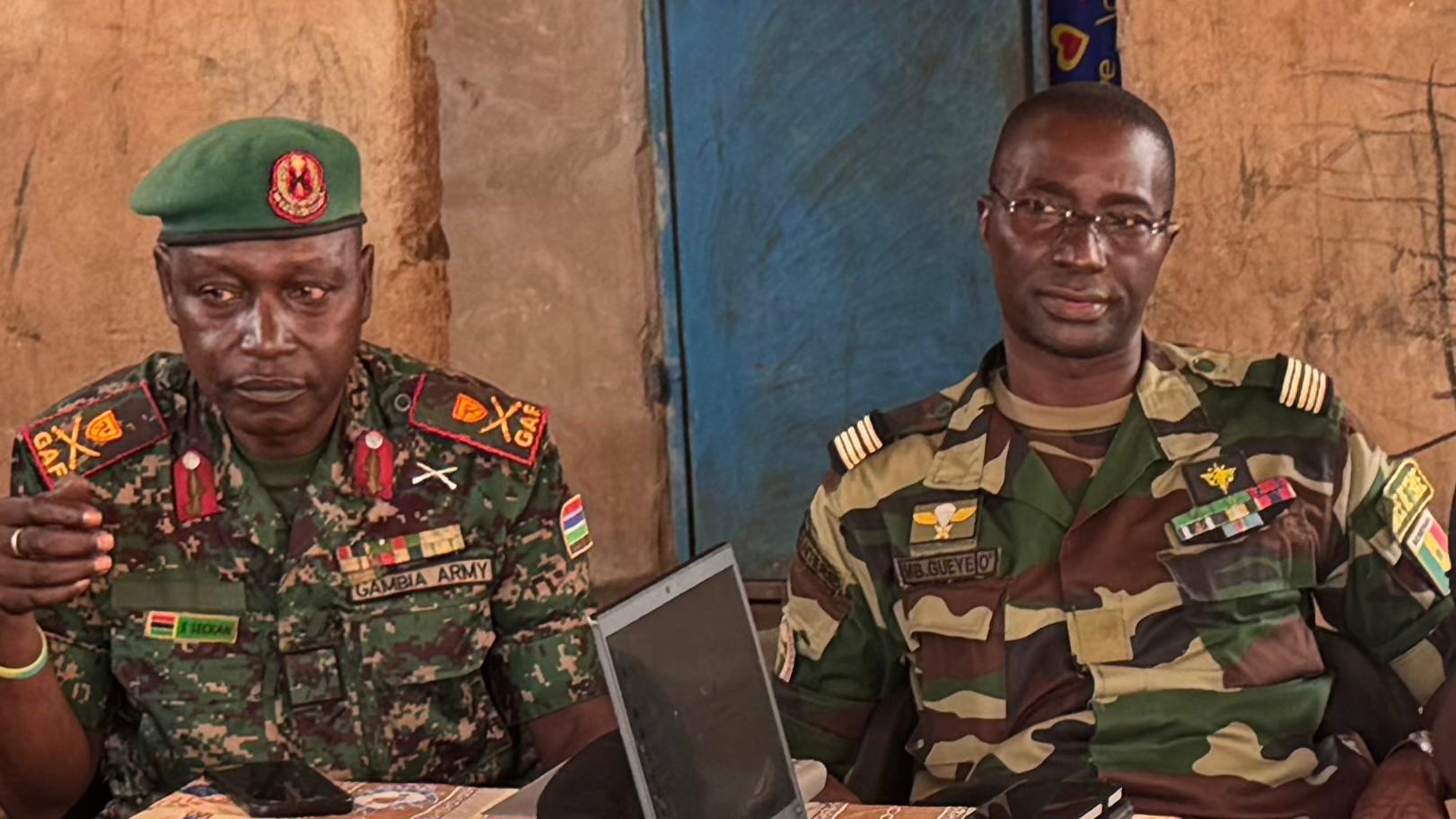
The Gambia-Senegal Boundary Commission has held a preparatory meeting in Njaw, CRR, ahead of a joint sensitisation campaign on the boundary densification exercise.General Saikou Seckan of the Gambia Armed Forces said the boundary was demarcated in 1904 and stressed that the sensitisation team’s role is to explain the exercise and allay concerns among border communities.Colonel Gueye of the Senegalese Territorial Army said the exercise aims to clarify the existing boundary. He assured residents that it is not intended to take away their land, but said landowners must comply with the laws of the country where their land falls.Lt Col. Lamin Krubally, Farafenni Commanding Officer, stressed the exercise's importance to national security, while Dawda Fatty, Director of Lands and Survey, highlighted the strong family ties between communities on both sides.The local chief welcomed the initiative, saying “The farms are older than the boundaries.”The joint sensitisation campaign launches Friday at Njaw CRR. Delegates from both The Gambia and Senegal and international agencies are expected to attend.
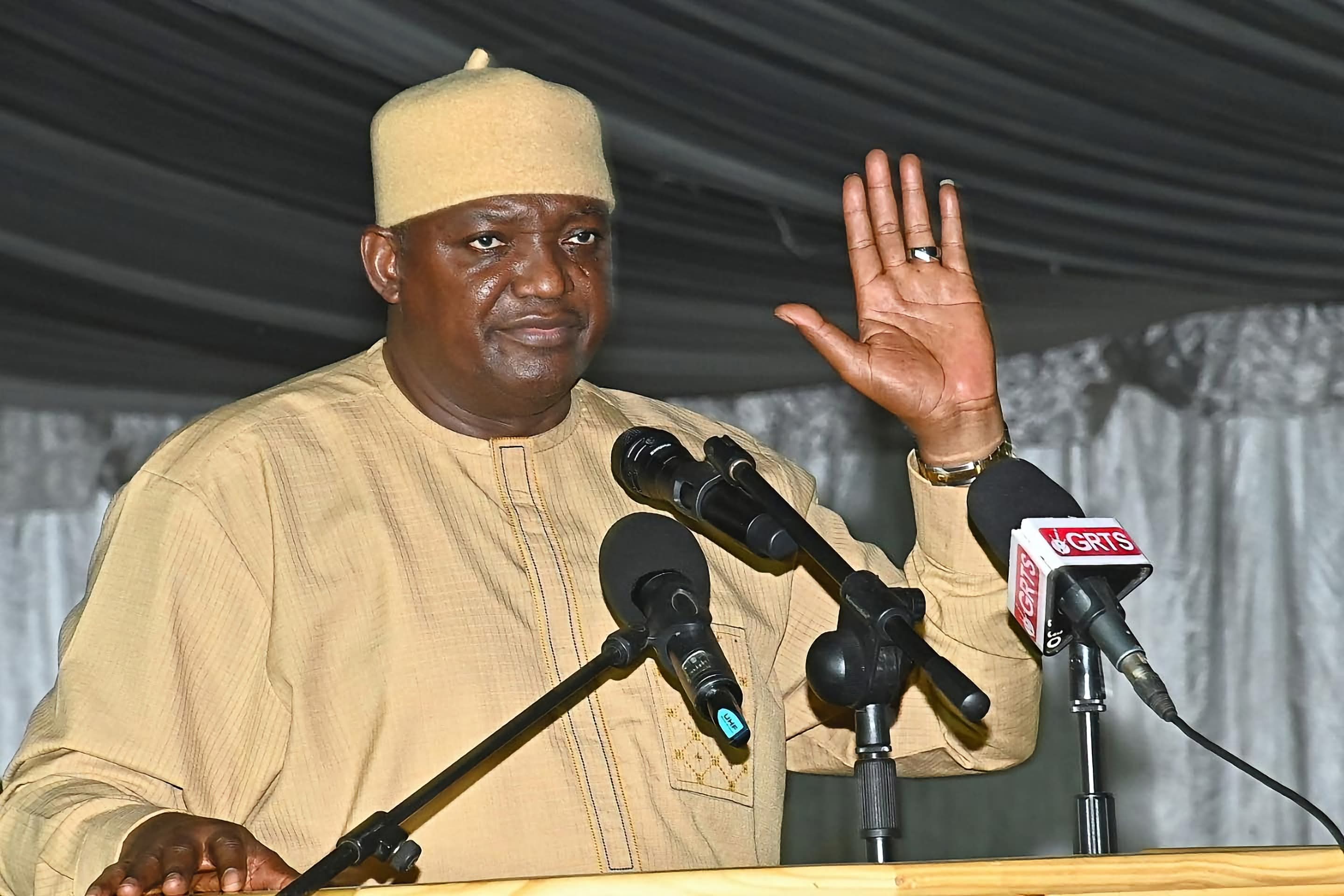
President Adama Barrow has pledged an additional D50 million to empower Gambian women and strengthen their participation in national socio-economic development.President Barrow made the pledge in Kaur and Kalen Jawbeh during his ongoing Meet the People Tour in Central River Region North. He also disclosed that the government has awarded contracts for the second and final phase to provide electricity to the remaining communities in the region.The President was speaking at a joint meeting in Kaur for Lower Saloum, Upper Saloum and Nianija Districts.The meeting opened with statements from community leaders who thanked the President for unprecedented developments in roads, electricity, health and education. While acknowledging the gains, they appealed for expanded access to electricity and clean water, and support for farmers affected by poor rainfall this season.They renewed their loyalty to President Barrow and pledged to ensure a landslide victory for the NPP-led Grand Alliance in the December polls.The National Assembly Member for Lower Saloum, Honourable Sainey Jawara, commended the developments but appealed for fast-tracking of electricity to cover the remaining communities in CRR North.Minister of Lands, Regional Government and Religious Affairs, Honourable Hamat N.K. Bah, described Kaur as a former major commercial hub whose economy declined due to decades of neglect. He said President Barrow will rebuild the town through a new port and modern road network.Minister Bah also warned Chiefs and Alkalolu to desist from allocating state lands to foreign individuals for agricultural purposes without approval from his Ministry. He said the government has approved a new Land Policy that protects state lands from encroachment, and warned that violators will face consequences.In his address, President Barrow thanked the people of Nianija, Lower and Upper Saloum for the massive turnout, describing it as a vote of confidence in his leadership.On women’s empowerment, he said the additional D50 million for women farmers and entrepreneurs will bring his government’s total allocation to women to D100 million.On energy, President Barrow said his government has achieved unprecedented expansion in the last nine years, with contracts already signed for the remaining unelectrified communities in CRR. The announcement was greeted with applause.From Kaur, the entourage proceeded to Kalen Jawbeh in Sami Constituency, where thousands staged a massive reception.Community leaders in Sami and Niani also praised the government for life-changing projects, noting that 63 villages in the area now have electricity. They, however, cited insecurity, robbery and cattle rustling as major challenges and appealed for a PIU post to address the problem.At the same meeting, Kuntaur Area Council Chairman, Saihou Jawara, presented eight motorbikes to community health workers to ease mobility and improve rural healthcare delivery.Responding, President Barrow said 204 villages have been connected to the grid in the last nine years, compared to only 40 villages in 52 years under the Jawara and Jammeh administrations. He said the remaining eight villages will soon be connected and urged patience.On security, President Barrow assured that the government takes the matter seriously and will deploy a PIU unit to fight robbery and cattle rustling in border areas.He appealed for massive support in the December election, saying the vote will determine whether Gambians choose progress or a return to underdevelopment. He cautioned supporters against overconfidence and urged hard work to secure a resounding victory for the Grand Alliance.He thanked the people of Sami and Niani for the huge turnout despite the late hour, expressing hope that the support will translate into votes.
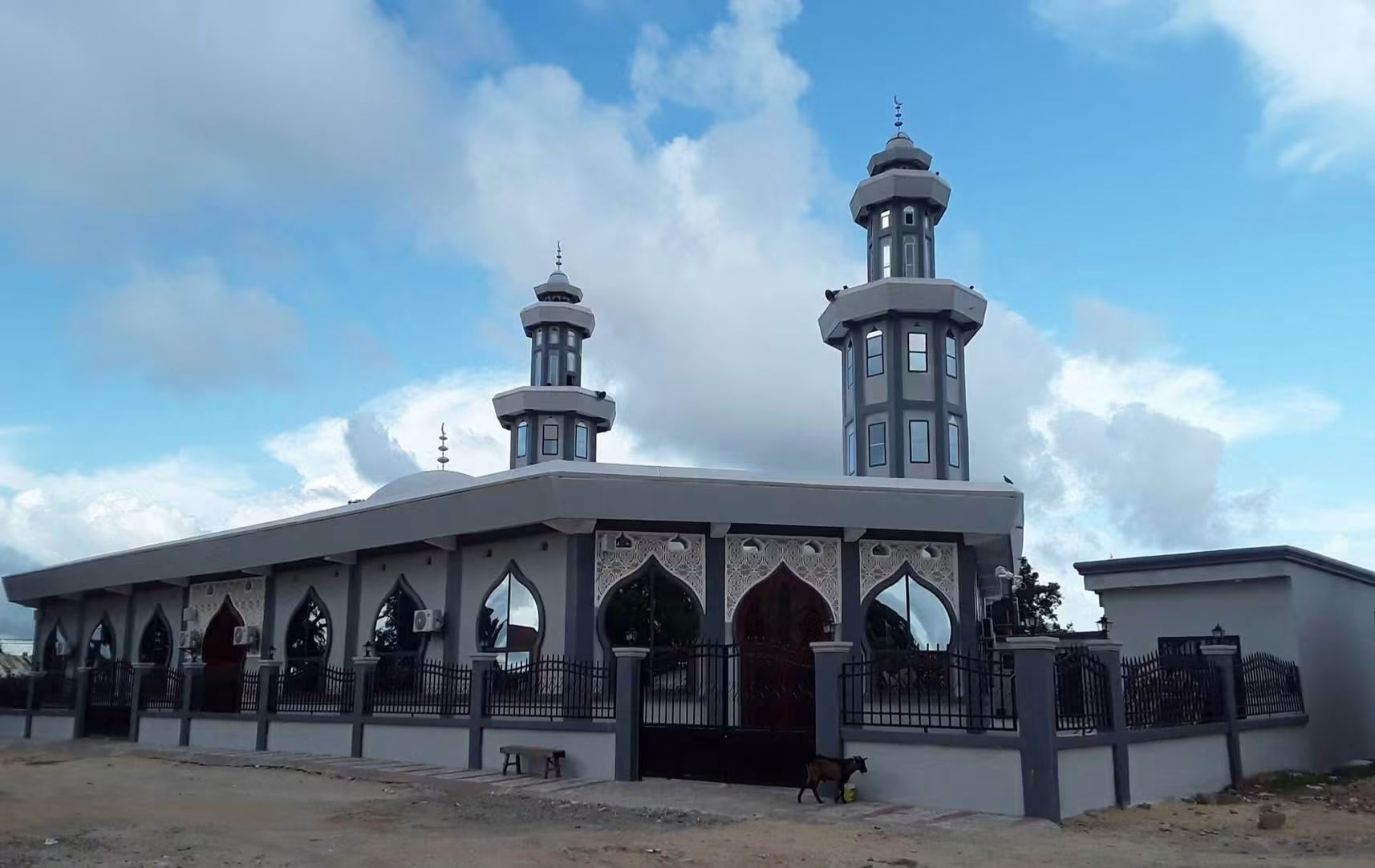
President Adama Barrow on Friday inaugurated a new mosque in Gunjur, a project funded by the Presidency. The ceremony drew cabinet ministers, senior government officials, religious leaders, elders, and residents of Gunjur and neighbouring settlements.On arrival, President Barrow was received by West Coast Region Governor Ousman Bojang and the Minister of Regional Government, Lands and Religious Affairs, Hamat N.K. Bah, along with other dignitaries.(Minister of Regional Government, Lands and Religious Affairs, Hamat N.K. Bah welcoming President Barrow as he arrived in Gunjur.)By noon, the mosque and its compound were filled, with many others seated outside for the historic opening.Imam Alhagie Muhammed Lamin Touray led the prayer service. In his sermon, he preached peace, unity, and stability, and urged Muslims to fulfil their religious obligations with dedication.(Imam Alhagie Muhammed Lamin Touray, who was a former President of The Gambia's Supreme Islamic Council, delivering the sermon.)The Imam then led the two-rakat prayer marking the official inauguration of the mosque.Speaking after prayers, Imam Touray expressed profound gratitude to President Barrow for sponsoring the construction. He recalled past challenges the community faced in raising funds for a mosque, and said the President had fulfilled their long-held dream."This singular act will enhance the spiritual development of the community," Imam Touray said. He also thanked women, youth, and religious leaders for their support during the project.(President Barrow flanked by Chief Falalo Touray and Alkalo Dembo Darboe of Gunjur.)Chief Falalo Touray and Alkalo Dembo Darboe of Gunjur also commended the President. They noted that the mosque, together with ongoing road and infrastructure projects, will promote the religious and social development of Gunjur. They urged residents to support the President to enable him to continue his development agenda.Minister Hamat N.K. Bah described the mosque as one of the most modern in the country, built to meet contemporary architectural standards.He disclosed that President Barrow has funded several mosque projects nationwide, reflecting his commitment to Islam and the spiritual development of Muslims.The Minister echoed calls for Gambians to support the President’s re-election bid in December. He also thanked elders and religious leaders for preaching peace and tolerance, and urged them to continue guiding to preserve national tranquillity.In his inaugural statement, President Barrow thanked the Gunjur community for the honour, noting he had long pledged to support the project.(President Barrow addressing worshippers after the prayer.)He described Gunjur as a historic Islamic settlement that produced renowned scholars including Omar Bun Jeng and Hatab Bojang. He said mosques play a vital role in the spiritual and moral development of society.The President thanked anonymous donors who supported the construction and urged the community to pray for them. He called the mosque a progressive project that has changed the infrastructural landscape of Gunjur.President Barrow challenged residents to take good care of the mosque and its facilities, and pledged government support for its upkeep and maintenance.On the upcoming December elections, the President urged Gambians to pray for peace. He reassured the nation of the government’s commitment to a smooth and credible process."There are no losers in elections," President Barrow said. "A peaceful and credible process promotes The Gambia’s image as a democratic country."The President departed Gunjur to a large farewell crowd.




Leave A Comment
Your email address will not be published. Required fields are marked *