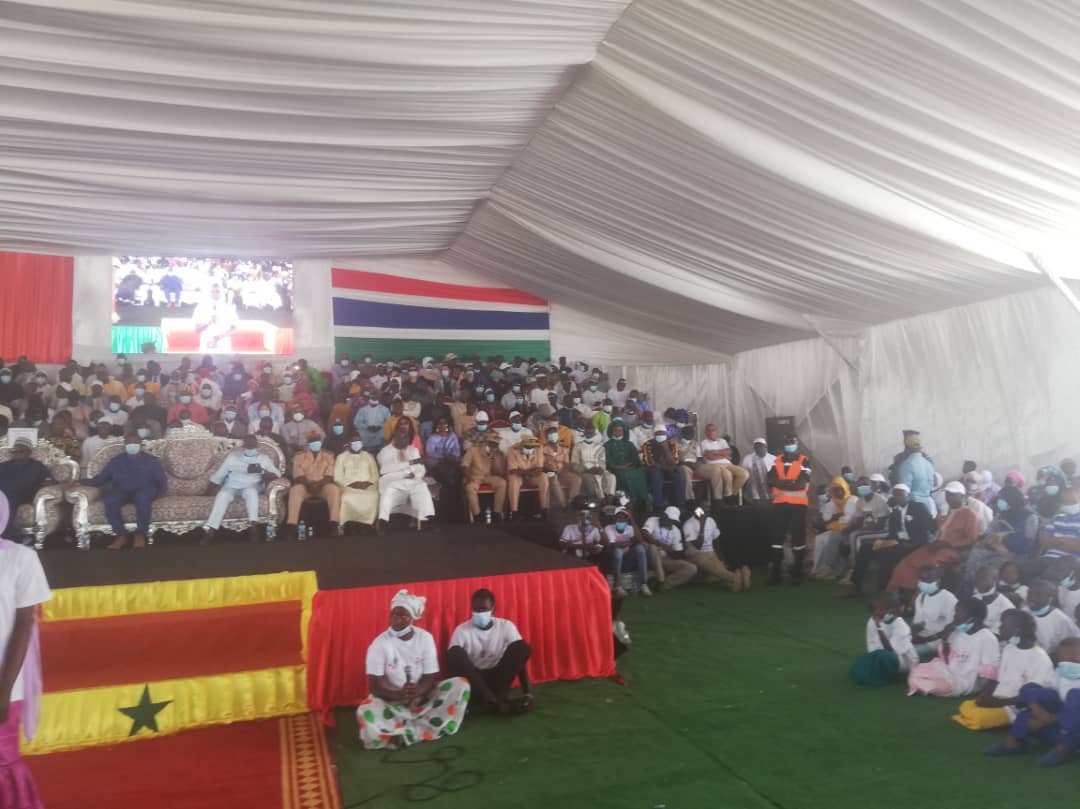
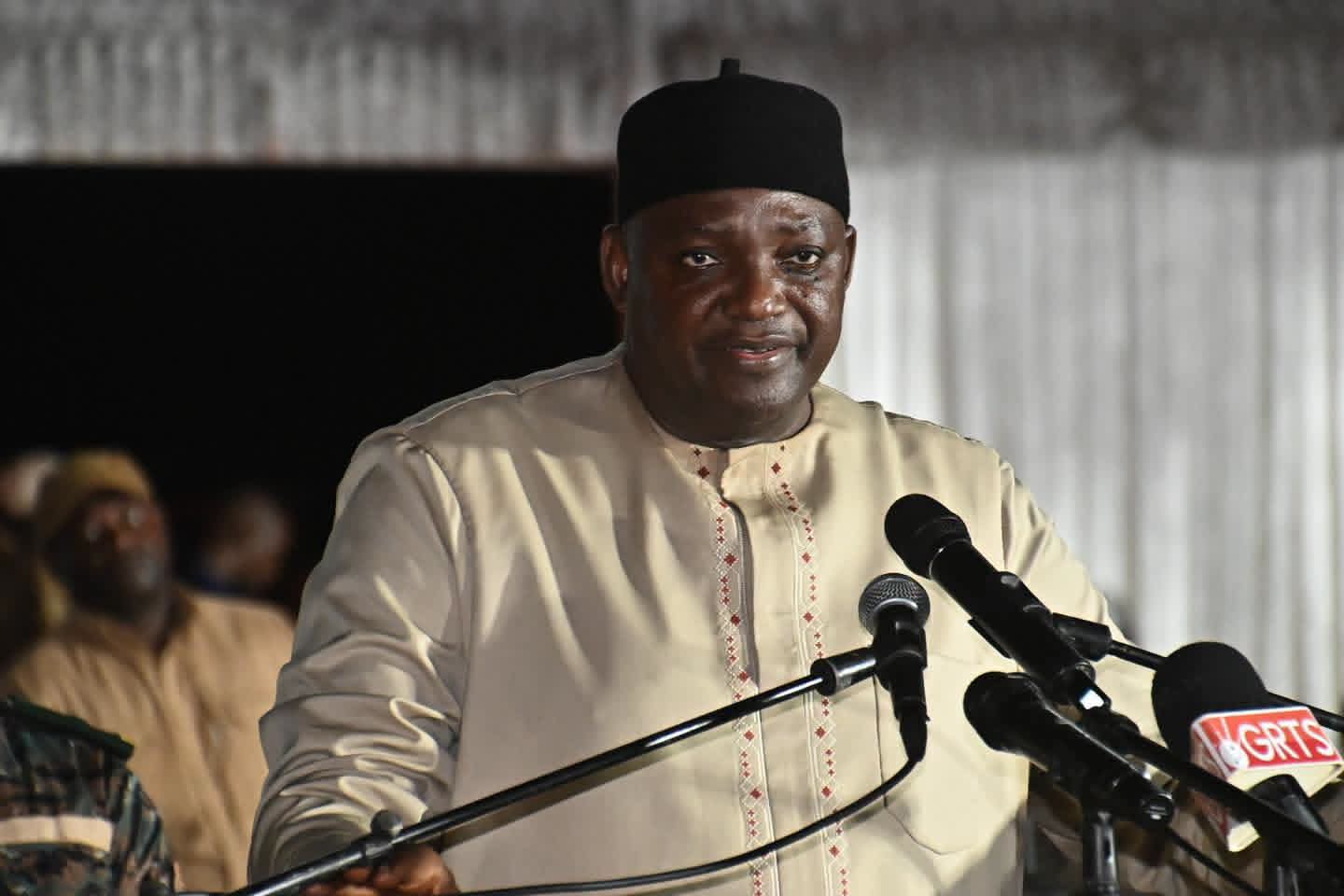
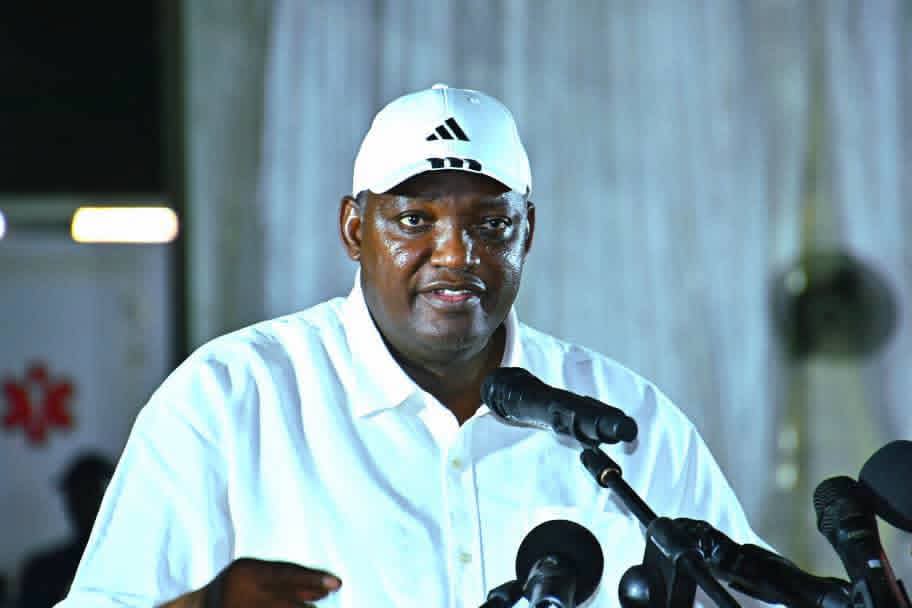
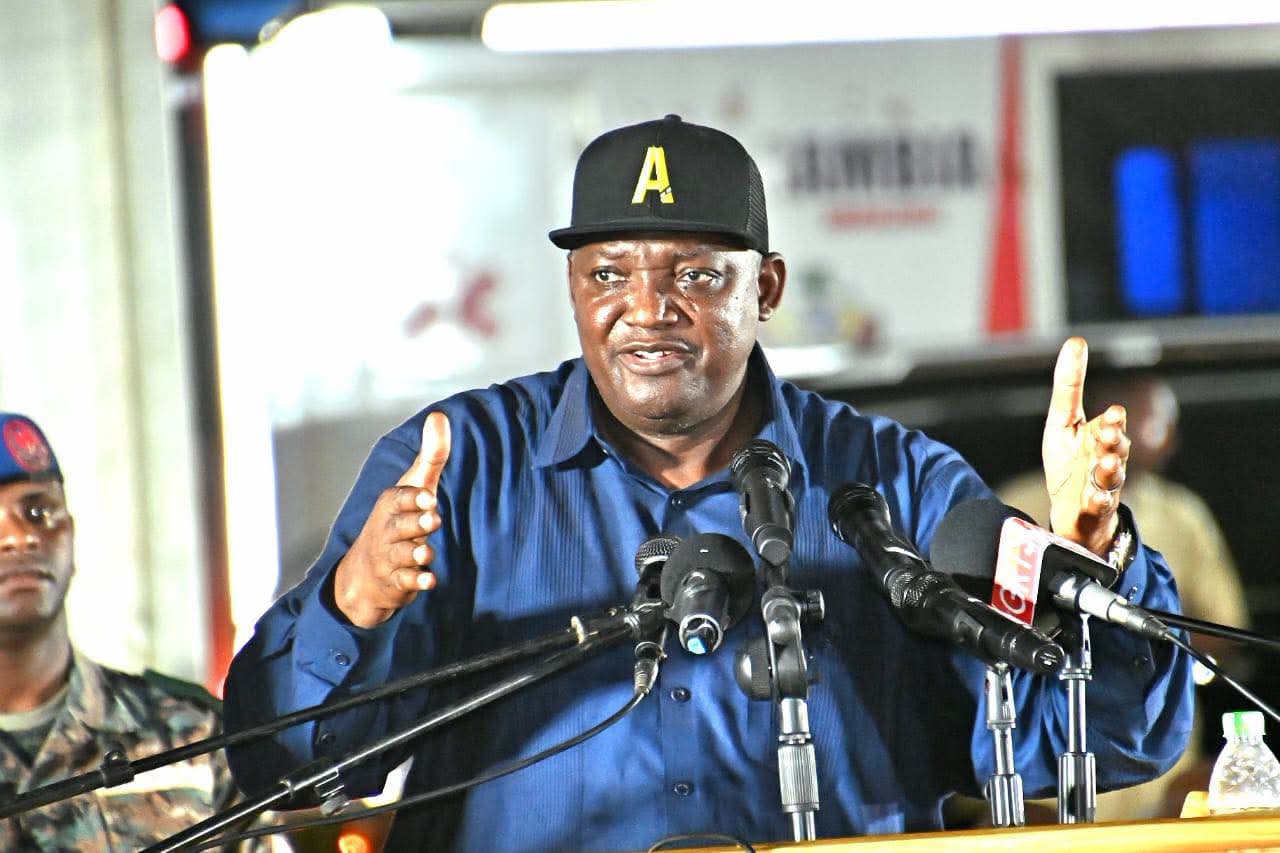
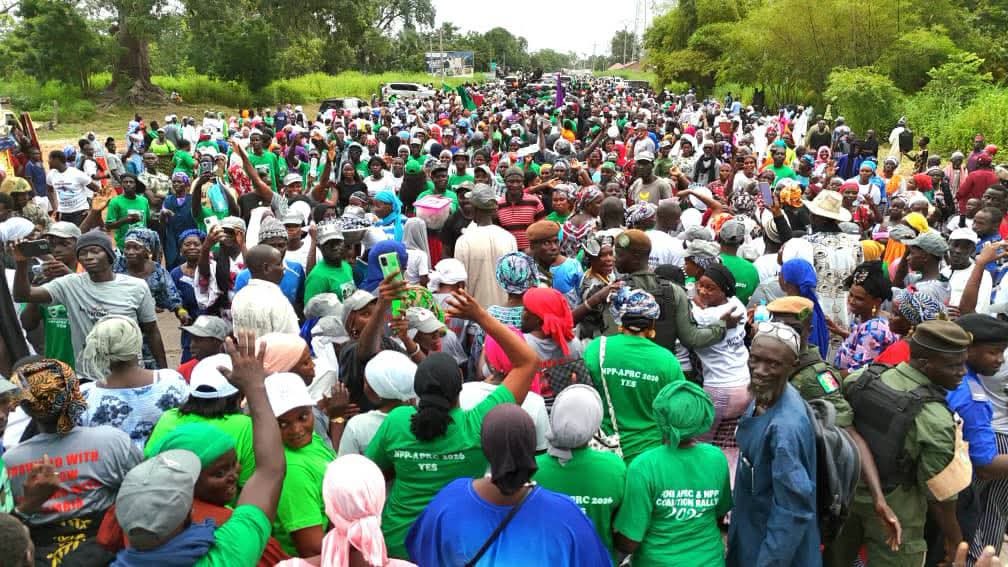
President Adama Barrow says ten years of his leadership have delivered more development in education, health care, infrastructure, electricity and skills development than 52 years under his predecessors combined.President Barrow was speaking in Manduar as he continued his Meet the People Tour in the West Coast Region.The President arrived in Manduar to a massive reception, with thousands of enthusiastic supporters lining the main highway leading to the meeting grounds.Manduar is a major stronghold of the NPP-led Alliance, and the turnout reflected that as supporters filled the football field to capacity.Delivering the welcoming remarks, the Alkalo of Manduar thanked the President for choosing the village as the venue for the Brikama Central meeting. He praised President Barrow’s charismatic leadership and the developments undertaken over the last ten years.The Alkalo also expressed gratitude to the President for paying alkalolu salaries for the first time in The Gambia’s history, describing it as a clear demonstration of his generosity and commitment to the welfare of Gambians. He promised to mobilise all his constituents to vote for President Barrow in December.Several other speakers underscored the importance of the meeting in consolidating the large voter base in Brikama Central, Brikama North and Kombo East. They said President Barrow represents progress, peace and stability, and commended his unprecedented developments across the country.The National Assembly Member for Kombo East, Hon. Abdou Sowe, declared that the opposition is “dead” in the region, arguing that President Barrow’s development record has convinced the people to abandon the opposition in favour of the NPP. He predicted a landslide victory for the President in December and said stakeholders are working closely to mobilise the grassroots.Minister of Agriculture Dr Demba Sabally said the government, through his ministry, has distributed tractors and power tillers to several communities in the West Coast Region, adding that thousands of kilograms of seeds and fertiliser have also been distributed to farmers, mostly women and youth.Minister of Lands and Regional Government, Hon. Hamat N.K. Bah, urged voters to give President Barrow another five-year mandate to continue his development agenda.In his address, President Barrow gave a comprehensive account of his government’s performance over the last decade, which he said surpasses the combined record of his two predecessors.On electricity, he said out of 1,800 settlements nationwide, only 300 remain without power, adding that tenders have been evaluated and contracts awarded to connect them.On roads, the President said his predecessors built about 800 kilometres in 52 years, while his administration has built almost 1,500 kilometres in just over nine years — a significant milestone.He said similar progress has been recorded in education, where his government has built thousands of classrooms equipped with electricity and science laboratories, constructed a unified campus for the University of The Gambia, and established several TVET centres across the country to equip young people with skills.On health care, President Barrow disclosed that the government has spent hundreds of millions of dalasis to modernise existing hospitals and health centres while building new facilities nationwide.These achievements, he said, underscore his commitment to national development. He called on voters to renew his mandate to enable him to accomplish more, stating that his government represents the future and cautioning Gambians against voting for the opposition.
Continue Reading >>